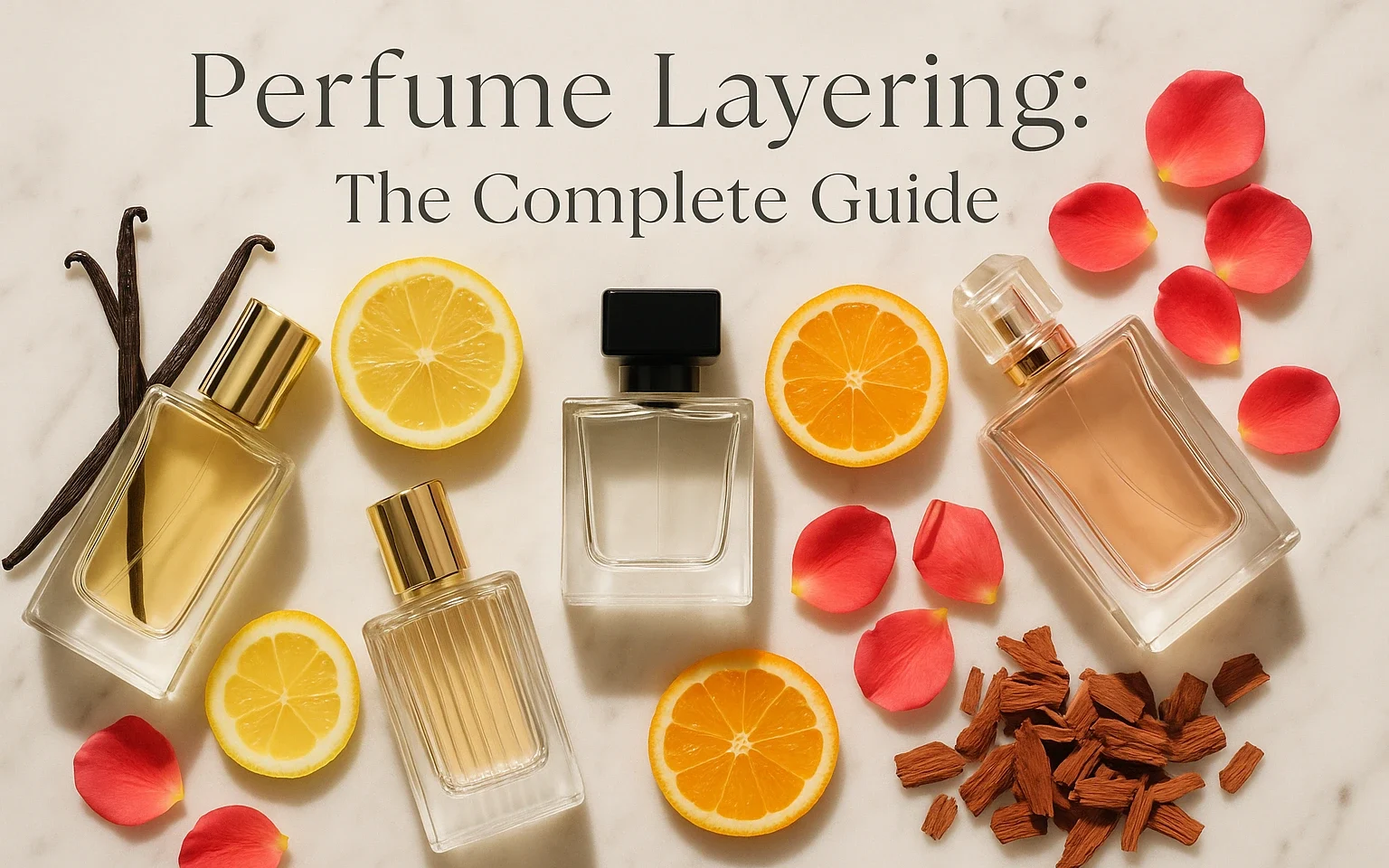
Perfume layering is the practice of wearing two or more fragrances simultaneously to produce a custom signature that no single bottle creates alone. Done well, layering produces architectural complexity that designer-tier compositions cannot replicate; done badly, it produces muddy compositions that read worse than either bottle on its own. The five principles below are the framework I use at the niche counter to teach buyers how to layer effectively, and the framework is built on architectural pairing rather than random experimentation.
Perfume layering is architectural complement-building. Random experimentation produces muddy results.
- Principle 1: Layer compositions with shared base notes for cohesion.
- Principle 2: Pair contrasting top notes for opening complexity.
- Principle 3: Apply heavier composition first, lighter second.
What perfume layering actually is
Perfume layering describes the practice of wearing two or more fragrances simultaneously, applied either on top of each other or on different application points (wrists, neck, chest, hair, clothing). The goal is architectural complementarity. The layered composition produces aromatic complexity that no single bottle achieves alone, while preserving the dominant character of the bottles being combined.
Layering is a different practice from creating “signature blends” by mixing fragrances in atomisers (which is generally not advised. Fragrance compositions are precisely calibrated, and mechanical mixing tends to produce unstable results). True layering applies fragrances separately to skin or clothing, allowing each composition to develop independently while interacting in the wearer’s aromatic projection envelope.
In Middle Eastern attar tradition, layering has been a foundational perfumery practice for over a thousand years. Traditional attar wearers commonly layer rose attar over oud attar, sandalwood over musk, or saffron over amber. Practices that build complexity from concentrated single-note materials. Western perfumery has historically discouraged layering in favour of single-bottle “signature” wearing, but the post-2010 niche perfumery movement has gradually rebuilt layering as a legitimate compositional practice for sophisticated buyers.
How layering works on skin
On skin, layered fragrances develop in two parallel arcs that interact dynamically. The first applied composition sets the base architecture; the second applied composition adds a complementary or contrasting top-note layer. Both compositions develop their own dry-down arcs, but the layered impression is dominated by the heavier composition’s base notes and the lighter composition’s top notes.
Skin chemistry affects layered compositions more dramatically than single-bottle wear. Two compositions interacting through skin oil, body temperature, and individual sebum chemistry produce variable results that can differ significantly between wearers. This is why layering works best with bottles you have already worn individually. Knowing how each one develops on your specific skin chemistry is essential before combining them.
The most-reliable layering approach uses bottles from compositionally complementary categories. Vanilla + saffron (Khamrah + Lattafa Asad) produces a warm-honeyed signature; oud + rose (Initio Oud for Greatness + Mancera Roses Vanille) produces a smoky-floral evening composition; citrus + musk (Bergamote 22 + Glossier You) produces a clean-bright daytime layering. Random experimentation produces muddy results; architectural pairing produces complexity.
A short history of layering practice
Layering as a perfumery practice is older than commercial Western perfumery. Middle Eastern attar tradition has used layered concentrated oils for over a thousand years; traditional Indian Ittars are similarly built on layering practices that build aromatic complexity from concentrated single-note materials. The Western perfumery industry largely ignored layering until the 21st century.
The first major Western brand to actively promote layering was Jo Malone London, which launched in 1994 with explicit “fragrance combining” marketing positioning. Jo Malone’s strategy treated their compositions as deliberately simple architectures designed for layering rather than as full-development single-signature releases. The approach commercialised layering for mainstream Western buyers and built the brand into one of the most successful niche-tier feminine perfumery houses of the late 20th century.
The post-2015 era has seen layering become an established niche-tier practice. Brands like Le Labo, Diptyque, and Hermès all provide layering guides for their compositions, and high-end buyers commonly combine niche-tier bottles to produce custom signatures. Today, approximately 30% of boutique customers report layering at least occasionally, and the practice has shifted from a Middle-Eastern-specific tradition to a mainstream sophisticated-fragrance practice.
The five principles for layering
Principle 1: Layer compositions with shared base notes for cohesion. Vanilla-anchored compositions layer well with other vanilla-anchored bottles (Khamrah + Layton + Tobacco Vanille all share vanilla bases). Amber-anchored compositions layer well with other amber-anchored bottles (Baccarat Rouge 540 + Grand Soir + Khamrah Maliky all share amber bases). The shared base prevents architectural conflict and produces cohesive layered signatures.
Principle 2: Pair contrasting top notes for opening complexity. Citrus + spicy works well (Bergamot opening + cardamom heart). Floral + woody works well (Jasmine opening + cedar base). The contrast in top-note categories produces aromatic complexity in the first hour of wear that single bottles cannot match.
Principle 3: Apply the heavier composition first, lighter second. Heavier compositions (Tobacco Vanille, Initio Oud for Greatness) should be applied to pulse points first, allowing them to anchor the base architecture. Lighter compositions (Bergamote 22, Aqua Universalis) should be applied second, on top or on adjacent application points, providing the opening top-note structure.
Principle 4: Limit layering to two compositions for most contexts. Three-bottle and four-bottle layering experiments produce muddy results in over 80% of cases. Two-bottle layering is the right practice for everyday wear; three-bottle layering should be reserved for specific event contexts where you have tested the combination beforehand.
Principle 5: Test combinations on skin for at least four hours before committing to wearing them in social contexts. Layered compositions develop differently than single-bottle wear, and the four-hour mark is when most layered combinations either reveal architectural coherence or expose the muddy-conflict problem. Always wear-test before committing to a layered signature for important contexts.
Want to understand fragrance families?
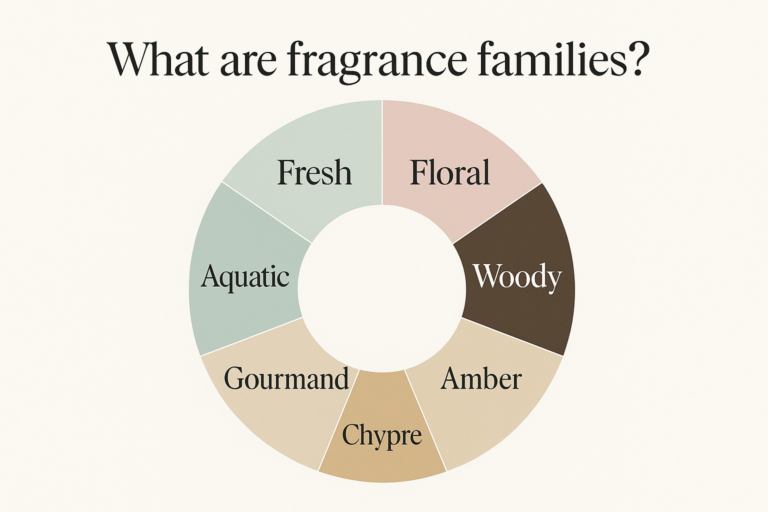
If layering is the architectural complement-building practice, fragrance families are the genre system that makes layering compatibility predictable. Understanding which families pair well together makes layering experiments significantly more reliable. Read the families guide →
“Perfume layering is architectural complement-building. Random experimentation produces muddy results.
Rodrigo H. · Counter Notes
Perfume layering is one of the most-misunderstood practices in modern perfumery. Both by buyers who avoid it because they have heard “you should never layer” and by buyers who experiment chaotically and produce muddy results. Done well, layering builds architectural complexity that single-bottle wearing cannot achieve.
For first-time layering buyers, start with two bottles you already wear individually. Pair compositions with shared base notes (two vanilla-anchored bottles, or two amber-anchored bottles) to ensure architectural cohesion. Apply the heavier composition first, the lighter second. Test on skin for at least four hours before committing to social wear. Build up to more complex combinations gradually, and always with reference points from individual single-bottle wearing.
Common questions
+Is perfume layering a good idea?
For most buyers, occasionally yes. Done deliberately with architecturally complementary bottles. Layering can build complexity that single-bottle wearing cannot achieve. But it should be approached as a deliberate practice rather than as random experimentation. Always start with bottles you have already worn individually and have skin-chemistry reference points for.
+How many fragrances can I layer at once?
For most everyday contexts, two. Three-bottle layering produces muddy results in approximately 80% of experimental cases; four-or-more-bottle layering rarely produces architecturally coherent compositions. Two-bottle layering is the established standard practice in both Middle Eastern attar tradition and modern Western niche perfumery.
+Should I apply both fragrances on the same spot?
Either approach works, but with different effects. Same-spot layering (apply both on wrists, for example) produces the most-integrated combined composition. Different-spot layering (one on wrists, one on neck or chest) produces a layered projection envelope where each composition develops slightly independently. For first-time layering, same-spot application is generally more reliable.
+Can I mix two perfumes in one atomiser?
Generally no. Fragrance compositions are precisely calibrated, and mechanical mixing tends to produce unstable results. The heavier oils settle to the bottom, the lighter alcohol-soluble compounds evaporate first, and the resulting mix degrades faster than either bottle individually. True layering applies fragrances separately to skin, allowing each composition to develop independently while interacting in projection.
+What fragrances should I never layer?
Strong fragrances with conflicting architectural anchors. Specifically: avoid layering smoky-leather compositions (Knize Ten) with citrus-fresh compositions (Bergamote 22). The architectural conflict produces muddy results. Avoid layering aquatic compositions (Acqua di Giò Profumo) with sweet-gourmand compositions (Cloud). The categorical conflict produces architectural confusion. Always layer within categorically-related compositions when possible.
+Can men and women layer?
Yes. Layering is gender-neutral by practice, and many of the most-successful niche-tier rotations include both masc-coded and femme-coded compositions in layered combinations. Couples often build shared layering practices around bottles they both wear individually. The key is architectural complement-building rather than gender-coded category rules.
 Education
What Are Fragrance Families? A Simple Guide for Beginners
Read more →
How To Know Which Season A Fragrance Is Designed For
Read more → Education
What Is Saffron in Perfumery? The Golden Spice of Fragrance
Read more →
How To Make Your Perfume Last Longer: Expert Tips & Myths
Read more → Education
Iso E Super in Perfumery: A Guide to the Ghost ingredient
Read more →
Scent Chronicles participates in affiliate programs. We may earn a commission on qualifying purchases made through links in this guide, at no additional cost to you. This never affects which fragrances we recommend or what we say about them. Read full policy →