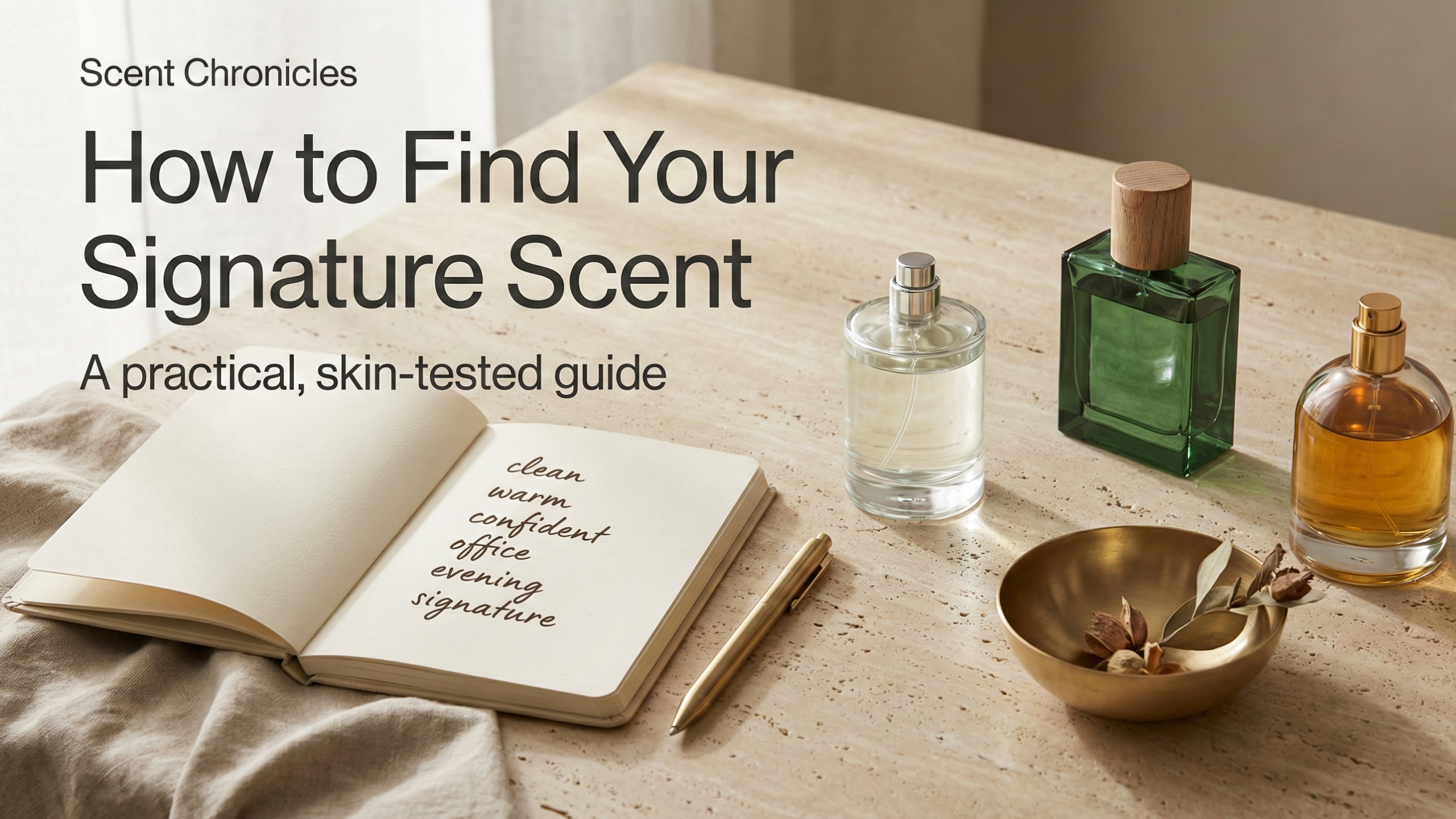
Finding your signature scent is the rare process that most fragrance content treats as instinct. Sniff bottles, find the one you love, commit. The actual practice is more methodical, and most buyers who follow a structured approach end up with bottles they wear for years rather than for months. The five-step framework below is the framework I use at the niche counter to help buyers identify compositions that match their architectural preferences, daily-context needs, and long-term wearing instincts.
Finding your signature scent is methodical, not instinctive. The five-step framework produces bottles you wear for years.
- Step 1: Identify the family you respond to (woody, oriental, floral, fougère, gourmand).
- Step 2: Match composition to daily context (office, evening, weekend, dressed).
- Step 3: Wear-test for at least 14 days before committing.
What a signature scent actually is
A signature scent is the fragrance a person wears consistently enough to become recognisable for it. The defining characteristic is duration. A real signature is worn for at least two years before being either upgraded or rotated out, and most established signatures hold for five years or longer. Anything shorter than two years is a phase rather than a signature; anything longer than ten years usually evolves into either a primary signature plus rotation pieces, or a complete signature replacement.
Signatures function differently from rotation pieces. A rotation piece is a fragrance worn occasionally for specific contexts (evening events, summer warmth, casual weekends); a signature is the bottle worn for daily-driver consistency across most contexts. Most established fragrance wearers eventually build a primary signature plus 3-5 rotation pieces; first-time buyers should build the signature first and add rotation pieces only after the signature is genuinely established.
The category includes both designer-tier and niche-tier compositions. Bleu de Chanel EDP, Sauvage EDT, Layton, Tom Ford Tobacco Vanille, and Baccarat Rouge 540 are all bottles that function effectively as signatures for adult buyers across multiple years of wear. The right signature depends on architectural preferences, daily-context needs, and budget. Not on whether the bottle is “designer” or “niche” by industry classification.
How signatures develop over time
Real signatures develop through three distinct phases. Phase 1: Discovery (months 1-3). The buyer falls for the composition, wears it frequently, and experiences the bottle as exciting and novel. Most “first impression” reviews and reactions occur in this phase. Phase 2: Integration (months 3-12). The composition becomes routine, the wearer adapts olfactorily, and the bottle starts to feel like an extension of identity rather than an external addition. Phase 3: Permanence (year 1+). The wearer becomes recognisable for the bottle, others associate the wearer with the composition, and the signature settles into long-term rotation as a default rather than a choice.
Most “wrong” signatures fail in Phase 2. Compositions that smell exciting in the discovery phase but become tiresome during integration are not real signatures. They are phases. The 14-day wear-test before committing is designed specifically to test for Phase 2 sustainability rather than for Phase 1 excitement.
Skin chemistry compatibility matters more for signatures than for rotation pieces. A composition that develops beautifully on your specific skin chemistry is dramatically easier to wear consistently for years than a composition that requires effort to wear well. The right signature feels effortless across daily contexts; the wrong signature requires application gymnastics or constant chemistry-management to wear consistently. Sample broadly before committing.
A short history of signature culture
Signature scent culture descends from 19th-century European aristocratic perfumery, where individual wealthy families commissioned bespoke fragrances from perfumers like Houbigant, Guerlain, and Coty. The “signature” was the family’s exclusive composition, worn consistently across generations and serving as a cultural marker. Modern signature culture inherits this tradition while extending it to broader middle-class consumer perfumery.
The 20th-century Western signature template emerged through specific releases. Chanel No. 5 (1921) became the first mass-market feminine signature; Old Spice (1937) became one of the first mass-market masculine signatures; Aramis (1965), Drakkar Noir (1982), and Cool Water (1988) all became signature compositions for entire generations of male wearers. The post-2010 era has seen a fragmentation of signature culture as buyers commonly maintain multiple rotation pieces rather than committing to single-bottle signatures.
Today, established signature culture exists alongside multi-bottle rotation culture. Some buyers maintain strong single-signature commitments (wearing Bleu de Chanel for ten years, for example); others maintain three-to-five bottle rotations without a clear primary signature; others build year-by-year evolving signatures that shift gradually across life stages. The right approach depends on individual preference, identity priorities, and lifestyle factors. There is no objectively correct strategy.
The five-step framework for finding your signature
Step 1: Identify the family you respond to. Sample compositions across the major fragrance families (woody, oriental, floral, fougère, gourmand, fresh-aquatic). Most buyers respond strongly to one or two families and weakly to the others. Once you know your family, focus your shopping there. The family preference rarely changes across years, even as specific compositional preferences evolve.
Step 2: Match composition to daily context. Identify the context where you most want the signature to perform. Office, casual social, evening events, weekend casual. The right composition depends on this context match. Office signatures should project moderately and read polished; evening signatures should project strongly and read distinctive; casual signatures should project lightly and read approachable.
Step 3: Wear-test for at least 14 days before committing. Sample the candidate composition for two consecutive weeks of regular wear before committing to full-size purchase. The 14-day test reveals Phase 2 integration sustainability. Bottles that remain interesting and wearable across the full test period are likely real signatures; bottles that feel tiresome by day 7-10 are likely phases.
Step 4: Validate with multiple skin-chemistry conditions. Wear the candidate across different ambient conditions (cool morning, warm afternoon, cold evening), different activity levels (sedentary office, active casual, exercise context), and different application methods (pulse points only, pulse points plus clothing). The right signature performs reliably across all these conditions; the wrong signature reveals weaknesses under specific scenarios.
Step 5: Commit gradually. Buy the candidate composition in 30ml or 50ml format rather than 100ml for the first purchase. The smaller volume lets you wear the bottle for 6-12 months and validate Phase 3 permanence before committing to long-term consumption. If the smaller bottle wears down to empty without rotation fatigue, upgrade to 100ml or larger formats. If you find yourself rotating away mid-bottle, the candidate was a phase rather than a signature.
Want to understand fragrance families?
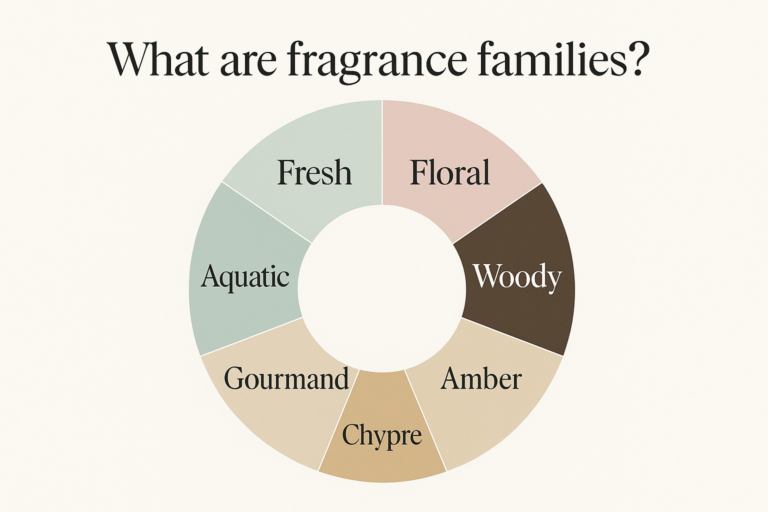
Step 1 of the signature framework requires identifying which fragrance family you respond to. The fragrance families guide covers the genre system that organises every composition into recognisable categories. Woody, oriental, floral, fougère, chypre, gourmand. Understanding the families makes the signature search dramatically more efficient. Read the families guide →
“Finding your signature scent is methodical, not instinctive. The five-step framework produces bottles you wear for years.
Rodrigo H. · Counter Notes
Finding a signature scent is one of the most-discussed and most-misunderstood processes in fragrance buying. Most popular advice (“just sniff bottles until you fall in love”) works for some buyers but fails for many others; the methodical framework above produces more reliable results across diverse buyer profiles.
For first-time signature buyers, the right approach is patience over urgency. The signature search should take 3-6 months rather than 3-6 weeks. Sample broadly across families before committing to a candidate; wear-test the candidate for two weeks of consistent daily wear; validate across multiple skin-chemistry conditions; commit gradually through smaller-volume bottles before upgrading to larger formats. The cost of buying the wrong signature is meaningful (both financial and emotional); the cost of taking longer to find the right one is rounding error.
Common questions
+How long does it take to find a signature scent?
Three to six months for most buyers using the methodical framework above. The faster approach (rapid in-store sampling, immediate full-bottle commitment) produces faster decisions but higher rotation-fatigue rates. The longer approach (sample-set evaluation, multi-week wear-tests, gradual volume escalation) produces more reliable long-term signatures.
+Should I have one signature or multiple?
For first-time fragrance buyers, one signature is the right strategy for the first six to twelve months. After establishing the signature, build a two-bottle rotation: signature for daily-driver use plus a contrast piece for specific contexts (evening, casual, seasonal). After two years, expand to a three-to-five bottle rotation. Never build a 10+ bottle wardrobe before the first signature is established.
+How do I know if a fragrance is wrong for me?
Three signals. Phase 2 fatigue. The composition becomes tiresome between days 7-14 of consistent wear. Skin-chemistry conflict. The composition develops differently than expected and requires application gymnastics. Context mismatch. The composition is wrong for your most-common daily context. Any of these signals indicates a phase rather than a signature.
+Can my signature change over time?
Yes, gradually. Most adults experience meaningful signature shifts every 5-10 years driven by skin-chemistry changes, lifestyle evolutions, and aesthetic refinement. The right approach is to let the shift happen naturally rather than forcing premature signature changes. If your current signature still works, keep wearing it; if it stops working, search for the next one with the same methodical framework.
+Should I match my signature to my partner's preferences?
Partly. Partner feedback is valuable. They will smell your signature more than you do, and their reactions matter. But the signature should also work for your own self-perception and daily-context needs. The right balance considers partner reactions as one input among several rather than as the dominant criterion. Compositions that please your partner but you find tiresome are not sustainable signatures.
+Is a designer or niche better for a signature?
Either can work. Designer signatures (Bleu de Chanel EDP, Sauvage EDT, Coco Mademoiselle EDP) provide universal-appeal architectures at accessible prices and project widely. Niche signatures (Layton, Baccarat Rouge 540, Tobacco Vanille) provide architectural distinctiveness at higher prices and project more selectively. Choose based on architectural preferences and budget rather than on category status.
 Education
What Are Fragrance Families? A Simple Guide for Beginners
Read more → Education
What is Sillage in Perfumery? Definition and Meaning
Read more → Education
What is Vanilla in Perfumery? A Guide to the Sweetest Note
Read more →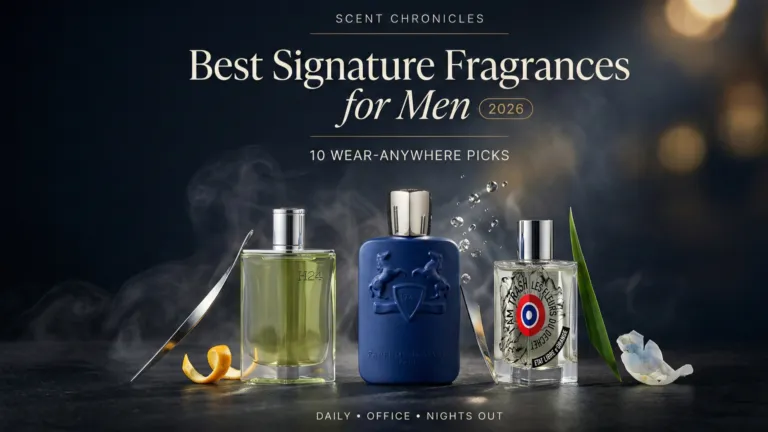
Best Signature Fragrances for Men (2026): 10 Wear-Anywhere Picks
Read more → Education
Iso E Super in Perfumery: A Guide to the Ghost ingredient
Read more →
Scent Chronicles participates in affiliate programs. We may earn a commission on qualifying purchases made through links in this guide, at no additional cost to you. This never affects which fragrances we recommend or what we say about them. Read full policy →