
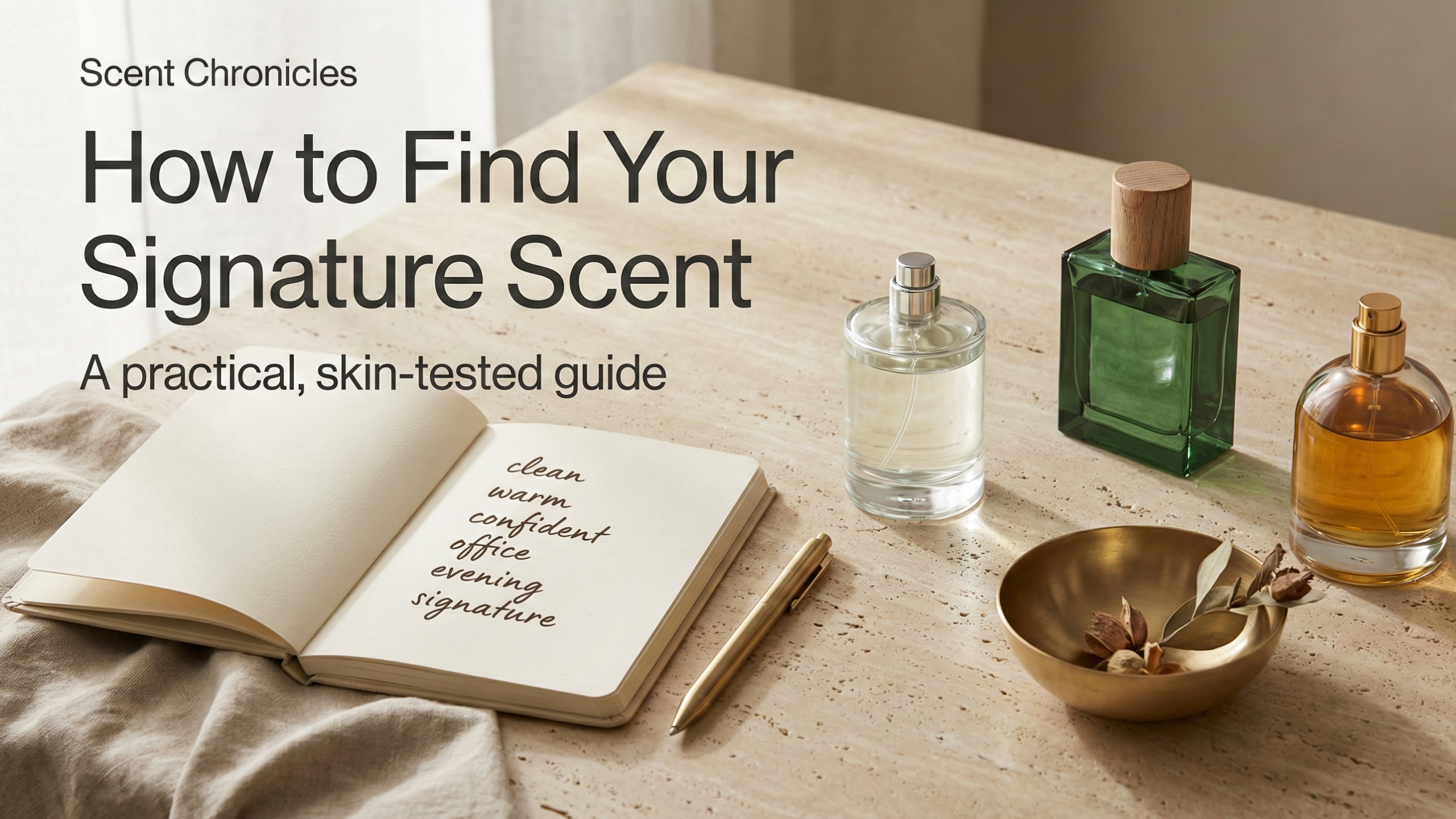
A signature scent is not about owning dozens of bottles. It’s about finding one (or a small handful) that makes you feel quietly put together, like you are showing up as your best self without trying too hard.
Learning how to find your signature scent matters because perfume lives on skin. It changes with heat, movement, stress, air conditioning, and how close people get to you. The right choice feels natural in your real life, not just impressive for 30 seconds at a counter.
I work as a fragrance consultant at a niche perfumery in Santiago (Liquo). I help people make this decision every week. Most clients are not “bad at fragrance”. They are overloaded. Too many bottles, too many opinions, and not enough structure for testing.
This guide gives you that structure. You will go from confusion to a calm shortlist, learn how to test properly on skin, and make a smart decision without overspending or rushing into a full bottle.
Quick answer: how to find your signature scent in simple steps
How to find your signature scent in simple steps
- Know yourself first: Think about your routine, personality, and environments (office, dates, gym, nightlife) before hunting for bottles.
- Choose one to two families to explore: Start with broad styles (fresh woods, soft florals, vanilla ambers, green aromatics) instead of chasing random hype.
- Test on skin, not just strips: Limit yourself to two to three perfumes on skin at a time and live with them for at least four to six hours.
- Use samples and discovery sets first: Travel sizes and discovery kits let you explore without overspending or rushing into a full bottle.
- Build a small “signature wardrobe”: Aim for three to five scents that cover work, dates, relaxed days, and special occasions instead of one “perfect” bottle.
- Give yourself a 7-day testing window: Rotate your top contenders for a week and notice which one feels the most “you” in real life.
At Liquo, the goal is never to sell more perfume. It’s to help you find the few scents that genuinely feel like your second skin, so you stop second guessing and start enjoying fragrance.
What a signature scent really is (and what it isn’t)
A signature scent is the fragrance people start to associate with you because you wear it often enough for it to become familiar. It’s an invisible part of your presence, like your style or the way you carry yourself.
A realistic signature scent is:
Natural: it feels like you, not like a costume
Repeatable: you actually want to wear it regularly
Compatible: it makes sense in the places you spend your time
What it is not:
Not one bottle you must wear forever
Not the most expensive fragrance you can find
Not the scent you love only in the first five minutes
A small truth I see constantly in the boutique: the happiest clients are not the ones who find the rarest bottle. They are the ones who find something that fits their daily life so well that wearing it becomes automatic.
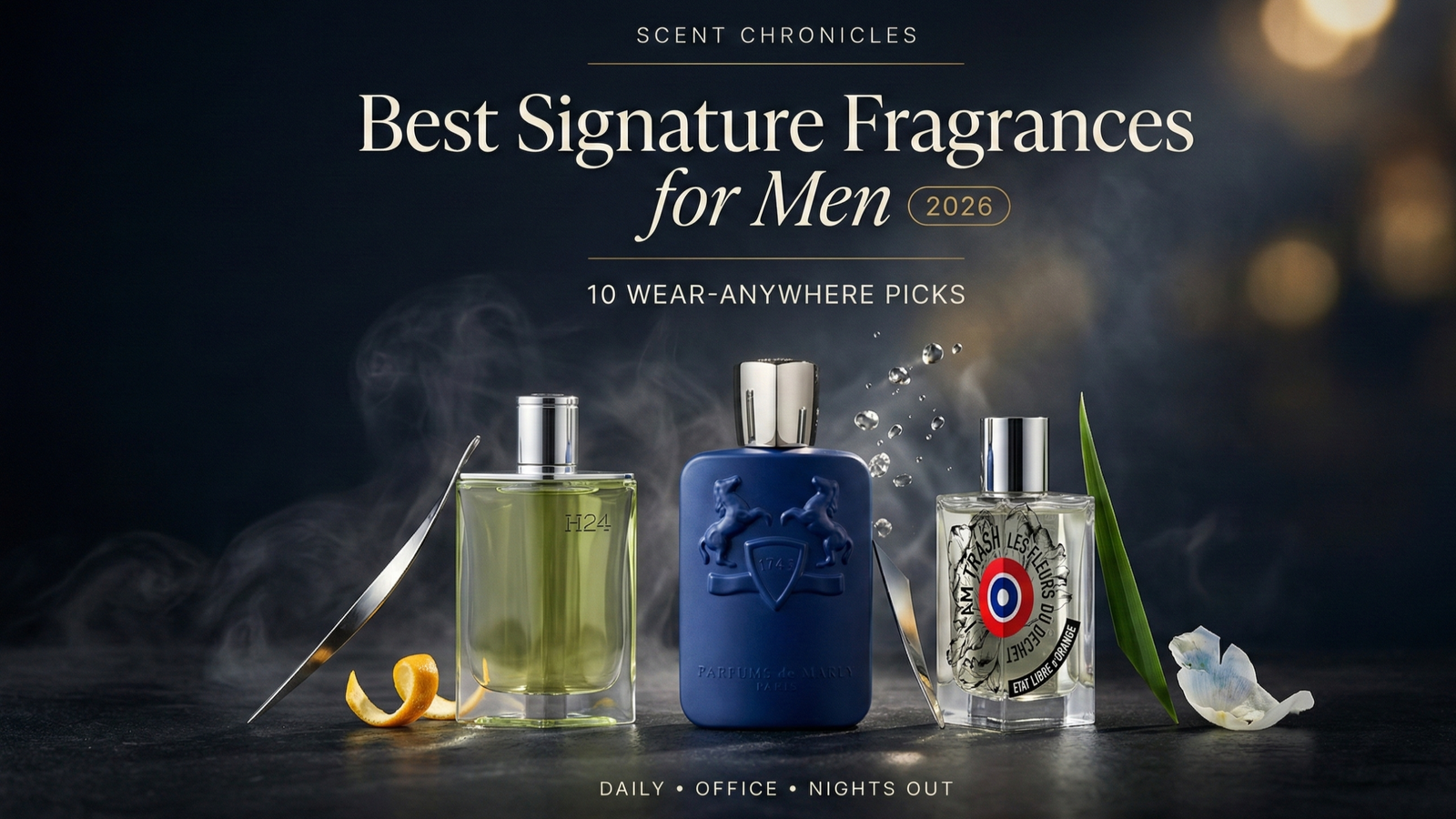
Shortcut: curated bottle ideas for men
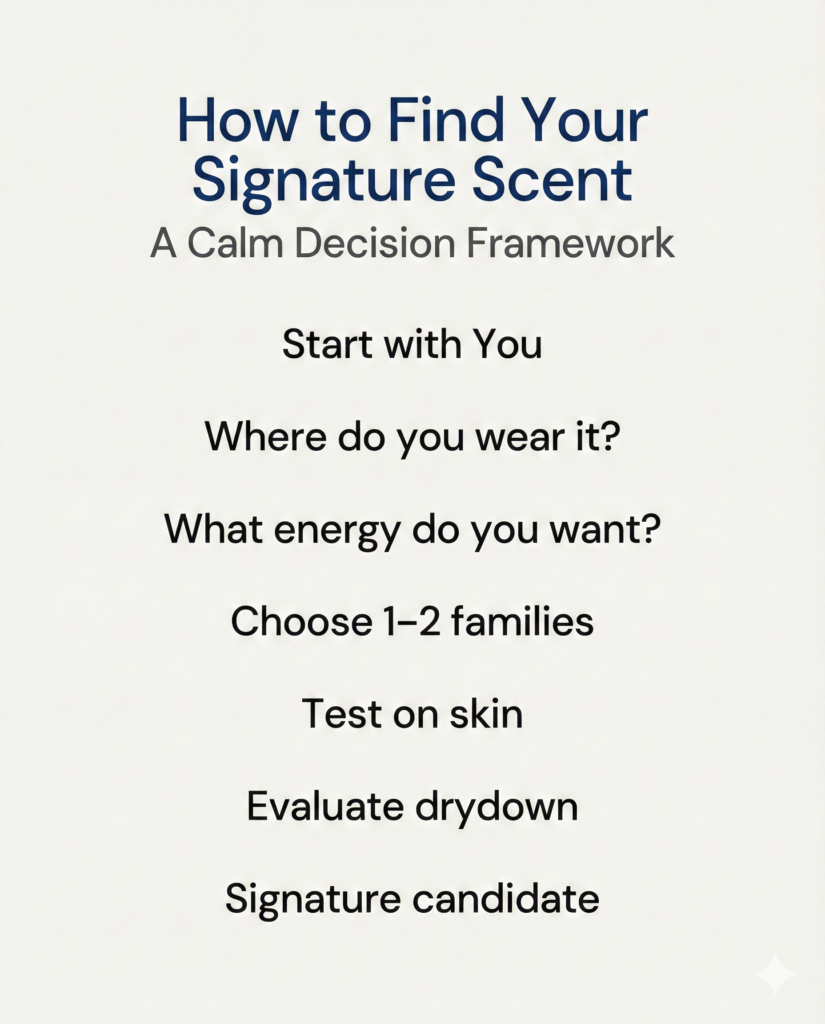
Step 1: Match your signature scent to your real life
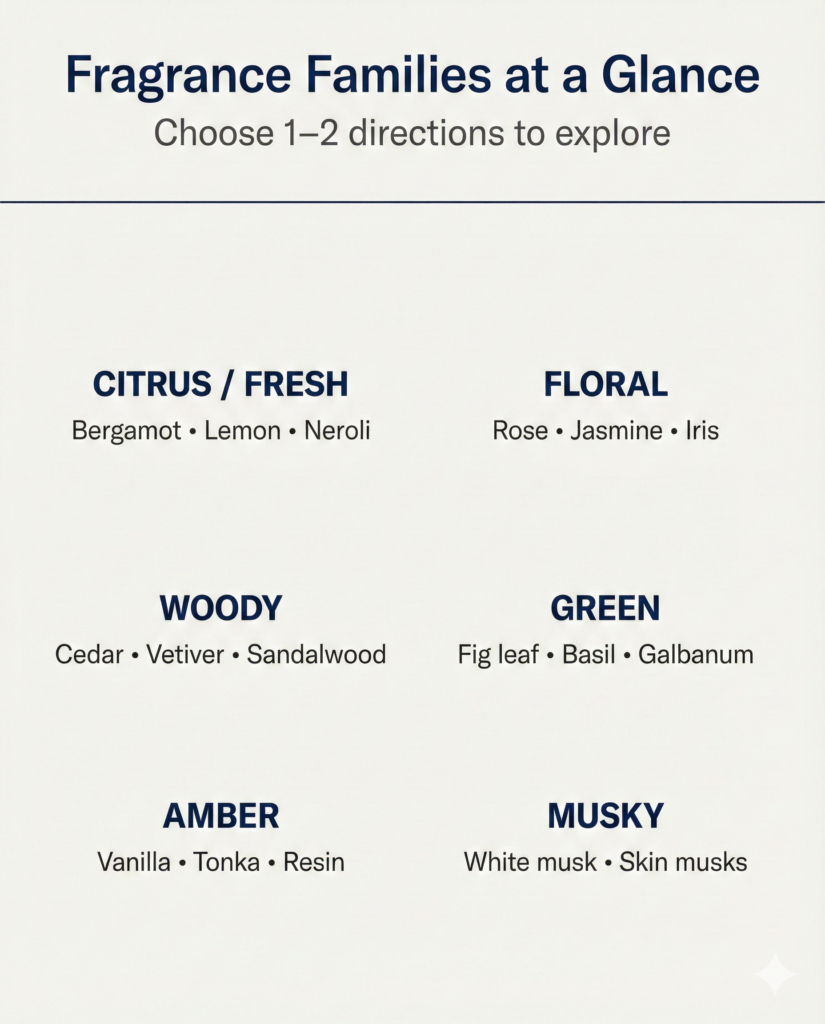
Match your signature scent to your real life
Before worrying about notes or brand names, think about how you actually live. The right signature scent should feel effortless with your clothes, your environments, and your social energy. It should not feel like something you have to perform.
In the boutique, I see this constantly: two people smell the same perfume and both say “nice.” One will wear it weekly. The other will forget it after a month. The difference is fit, not taste.
-
Clean and minimal
You like simple outfits, tidy spaces, and subtle confidence. Look at soft woods, iris, musks, and tea notes that smell polished up close. -
Warm and romantic
You enjoy cozy lighting and intimate settings. Try creamy vanillas, tonka, amber, and gentle florals that feel soft rather than sugary. -
Bold and charismatic
You don’t mind being noticed. Explore richer woods, leather, tobacco, spices, and resinous ambers that leave a memorable trail. -
Relaxed and outdoorsy
You feel best in fresh air and movement. Green aromatics, citrus, vetiver, and light woods tend to feel effortless and daytime friendly. -
Creative and niche curious
You like objects with a story and you enjoy being a little different. Look at fig, saffron, incense, unexpected musks, and “skin scent” ambers that evolve slowly.
If you already know you want something masculine, versatile, and office safe, you can jump straight to my Best Signature Fragrances for Men guide and use this section as a filter for which picks will feel most “you”.
Step 2: Understand how perfume behaves on your skin
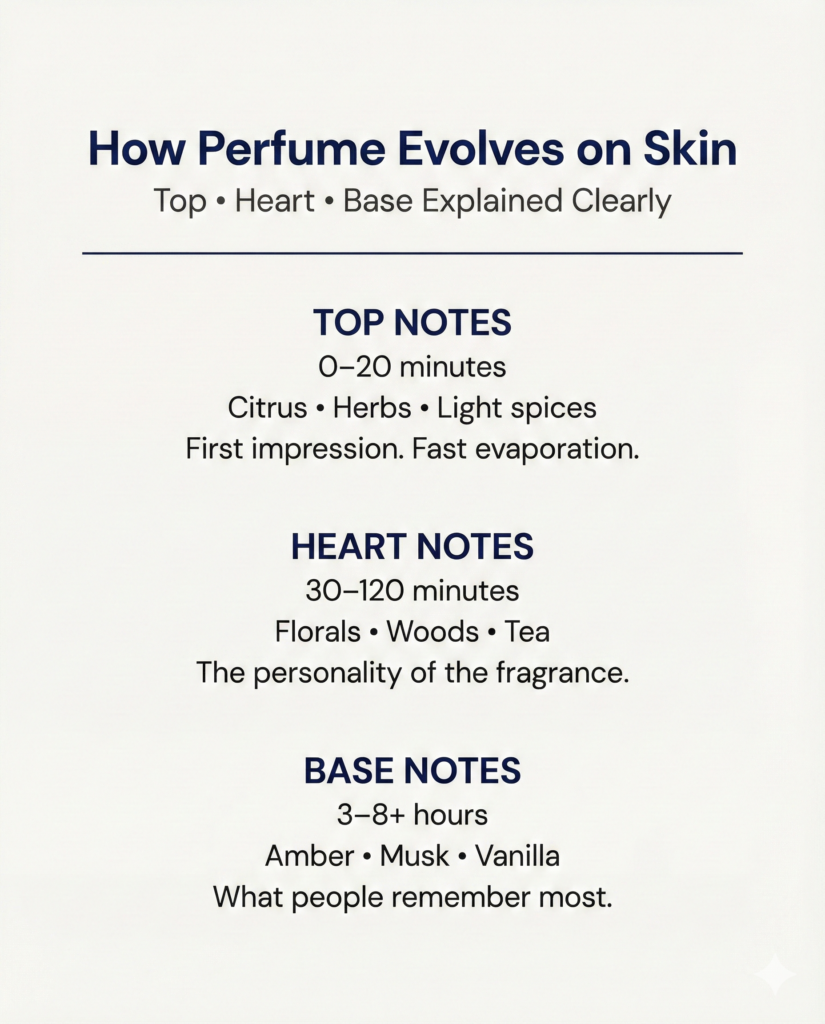
If you want to learn how to choose a signature scent without regret, you need to judge fragrance as a timeline.
Top notes: first impression, not the whole story
Top notes are the bright hello. Citrus, herbs, and airy aromatics often live here. They can be beautiful, but they fade fast. A lot of “love at first sniff” is just the opening doing its job.
Heart notes: where your signature personality lives
This is the part you actually live with. It’s where you learn if a perfume feels clean, cozy, sharp, romantic, or confident. If a scent is going to feel like you, it usually shows here.
Base notes: the part people remember
Woods, amber, vanilla, resins, and musks often sit in the base. When someone hugs you later in the day, this is usually what they notice.
Micro answers that save money:
If you love the opening but dislike the drydown, do not buy the bottle.
If a perfume feels heavy or irritating early, test again another day with fewer sprays.
If you only tested on paper, you have not tested yet.
Want the two guides that make everything click?
If this topic feels overwhelming, start with these two foundations. They’ll help you understand how perfumes are built and how to choose a direction before you test bottles on skin.
- What Is Perfume? A Beginner’s Guide to Fragrance Basics Learn structure, concentration, and why scents change over time.
- What Are Fragrance Families? A Simple Guide for Beginners Pick 1–2 families and stop testing randomly.
Read these once, and your nose gets faster at spotting what truly suits you.
Step 3: How to find your signature scent by testing like a pro
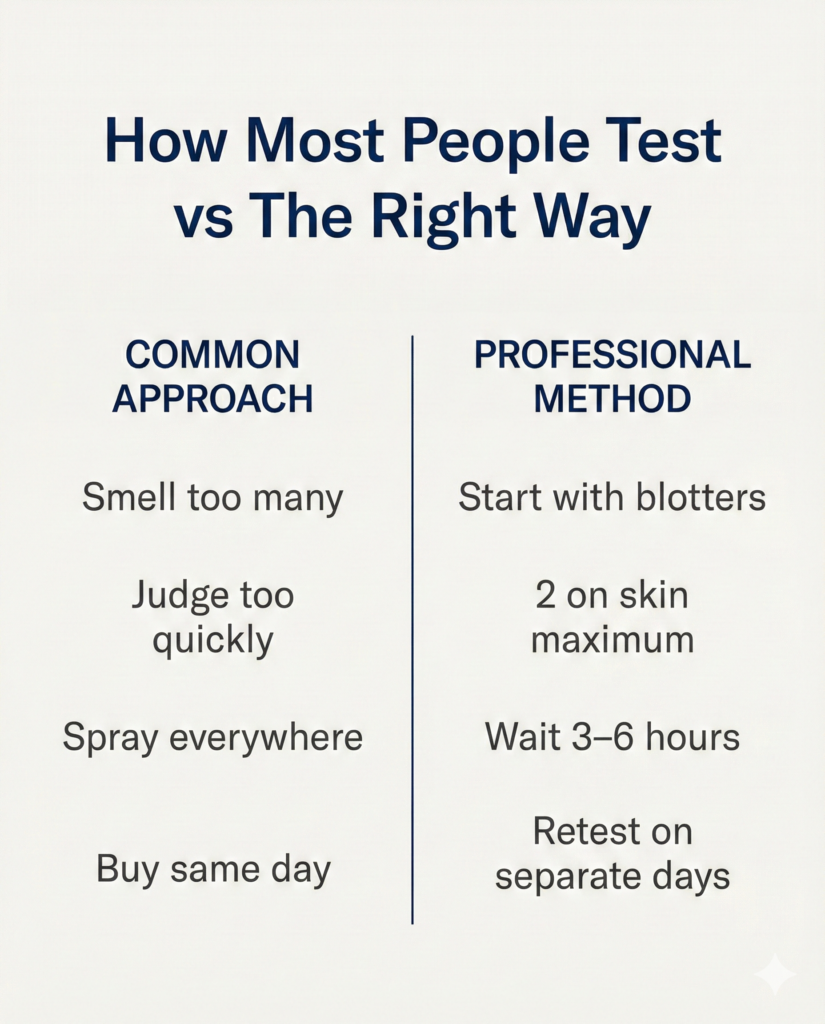
This is where most people go wrong. Not because they have bad taste, but because they test in chaos. Too many sprays, too many blotters, and then a bottle bought for the loudest opening.
At Liquo, the happiest clients do three things: they test fewer scents, they take notes, and they repeat wear the finalists.
What to do in-store
Start on blotters and narrow to three to five candidates.
Move to skin and keep it to two or three max.
Use one to two sprays per spot.
Check at 15 minutes, 90 minutes, and three to five hours.
Write down the name, and give it a comfort score out of 10.
What not to do
Do not test ten fragrances on skin in one visit.
Do not judge from caps.
Do not scrub off immediately unless you feel irritation.
Do not rub wrists together.
Do not overspray to “force” performance.
A real pattern I see in the boutique: someone says “too sharp” at minute five, then they come back later and ask to smell it again because the drydown turned soft and addictive. This flip is exactly why signature scent testing has to be slow.
Signature scent testing checklist (quick cheat sheet)
Signature scent testing checklist (the simple way)
Use these checkpoints to keep testing calm. This prevents you from buying based on the opening.
| Checkpoint | What to evaluate | What to write down |
|---|---|---|
| 15 minutes | Direction and comfort | Would I keep this on (yes or no) |
| 60 to 90 minutes | Heart clarity and balance | One line: clean, warm, sharp, sweet, woody, airy |
| 3 to 5 hours | Drydown and identity | Comfort score out of 10 |
| End of day | Do you still enjoy it? | Would I wear this tomorrow (yes or no) |
| Second wear | Consistency | Does it still feel like me in a different mood? |
Shortcut: your signature scent should score high at 3 to 5 hours, not only at 15 minutes.
Step 4: Don’t overspend (samples, discovery sets, smart buying)
If you’re serious about finding your signature fragrance, sampling is not optional. It’s how you test a scent in your real routine: commute, office, dinners, weekends, weather.
A simple strategy that works:
Small samples: quick elimination in two wears.
Discovery sets: map a brand’s style and learn your preferences faster.
Travel sizes: the best bridge when you love it but want more time.
A rule I share in the boutique: if you miss the sample when it’s gone, that’s information. If you forget it existed, that’s also information.
Want your fragrance to last longer?
Longevity is not only about the perfume itself. Application technique, skin preparation, and placement make a real difference in how a scent performs throughout the day.
Read: How to Make Your Perfume Last Longer (Expert Tips & Myths) →
Most performance issues I see in the boutique are application mistakes, not weak fragrances.
Step 5: Build a small signature wardrobe (3 to 5 scents)
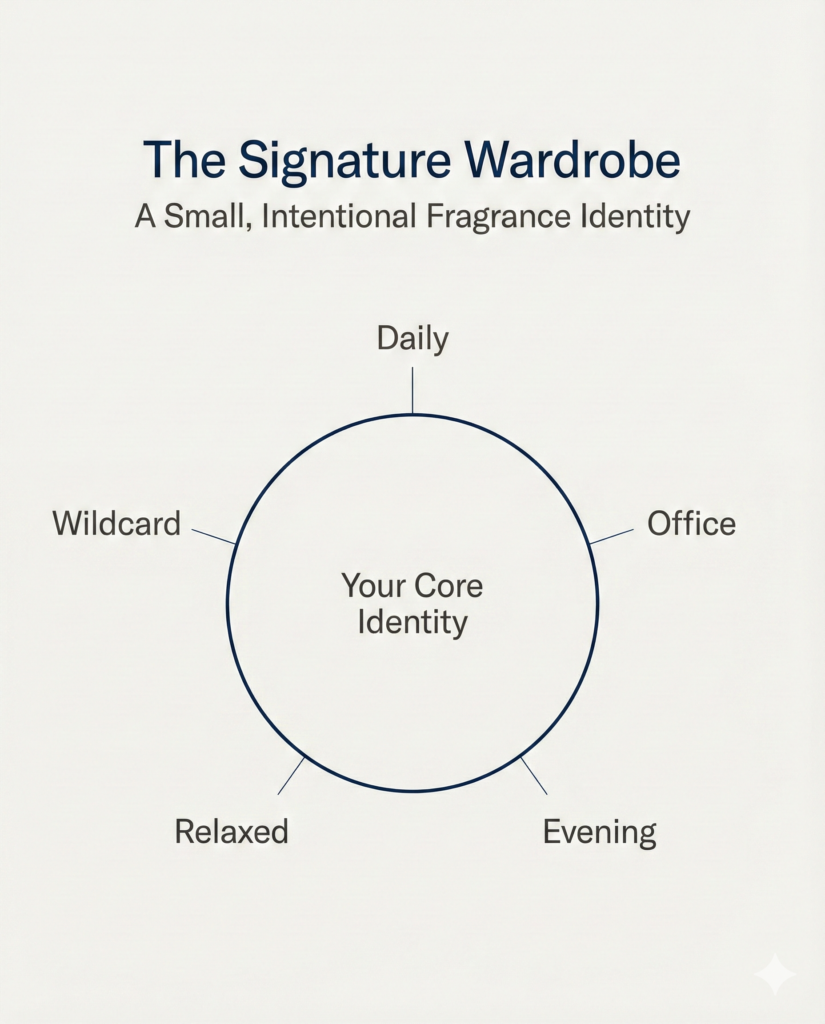
Many people don’t have one signature scent. They have a signature style across a few perfumes. Think capsule wardrobe: same vibe, different contexts.
A practical wardrobe covers:
daily baseline
work safe scent
evening or date scent
relaxed weekend scent
optional wildcard
Example wardrobe ideas (by style, not by bottle):
Fresh lover: citrus musks, airy woods, clean aromatics, vetiver greens
Cozy lover: tonka woods, gentle ambers, creamy vanillas, musky comfort scents
Niche curious: textured musks, mineral ambers, incense woods, fig and saffron styles
Now choose based on where you’ll actually wear it
A signature scent is not chosen in isolation. It has to work in your real environments — office, evenings out, different seasons. These guides will help you narrow your shortlist based on context, not hype.
- Best Office Fragrances for Women Polished, balanced scents that feel confident but never overwhelming.
- Best Office Fragrances for Men Versatile, professional options tested in real workplace settings.
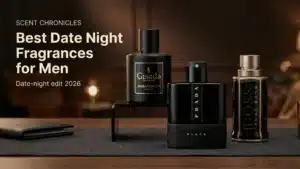
- Best Date Night Fragrances for Men Warmer, more intimate choices that create presence without shouting.
- How to Know Which Season a Fragrance Is Designed For Because temperature changes how a perfume feels on skin.
In the boutique, most “wrong purchases” happen when someone chooses a scent they love — but not one that fits their daily life. Context matters more than trends.
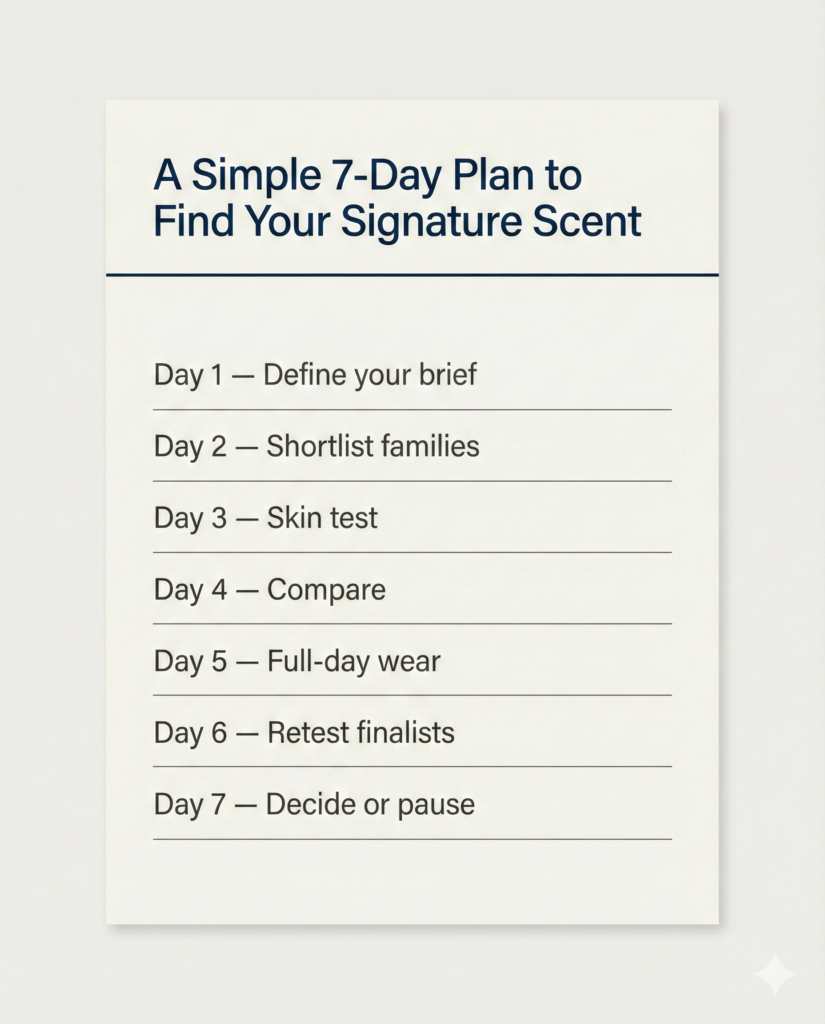
A simple 7-day plan to find your signature scent
A simple 7-day plan to find your signature scent
If you don’t want to drag this out for months, use this gentle one-week structure. It’s the same rhythm I use with clients in the boutique when we’re narrowing down a signature scent without rushing the decision.
-
Day 1: Define your brief
Write down your routine (work, commute, evenings), your style, and two to three scents you already like. Decide if you want your signature to feel more fresh, more warm, or balanced. -
Day 2: Shortlist families and candidates
Pick four to six realistic options that match your brief. Smell them on blotters and eliminate anything that feels wrong even on paper. -
Day 3: First skin test
Choose two perfumes and wear one on each wrist (two sprays max per wrist). Live with them for at least six hours and take notes at 30 minutes, 3 hours, and 6 hours. -
Day 4: Second skin test
Test two different candidates the same way. Compare your notes: which felt more like you, which felt tiring, too sweet, or too sharp? -
Day 5: Real life simulation
Wear your current favorite for a full day in your normal routine (office, errands, time with friends). Notice how it behaves in different spaces and temperatures. -
Day 6: Tie breaker
If you still have two strong contenders, put one on wrists and the other on neck or chest. Pay attention to which one you keep wanting to smell again. -
Day 7: Decision day
If one perfume consistently felt like your best self, choose a travel size or bottle. If you’re still unsure, stay with samples another week instead of forcing a choice.
Quick nightly questions that help:
- Did I feel like myself wearing this?
- Did I enjoy the drydown more than the opening?
- Did I want to smell my wrist again, or did I get tired of it?
- Did it fit my setting, or did it feel like too much?
You’re not failing if you don’t “find the one” in a week. The goal is to move from random testing to intentional testing so each wear teaches you something.
FAQ: common questions about finding your signature scent
How long does it usually take to find a signature scent?
For most people, it takes anywhere from a couple of weeks to a few months. You need time to test perfumes in different situations and notice which one you reach for without forcing it. If you rush the process, you are more likely to regret the bottle later.
Can I have more than one signature scent?
Yes. Many people have a small signature wardrobe: one scent for work, one for evenings or dates, and one for relaxed days. The key is that each one feels authentic and repeatable, not like a trophy you never touch.
Why does perfume smell different on me than on my friend?
Skin chemistry, hydration, body temperature, and climate all change how a perfume develops. That’s why testing on your own skin is essential when choosing a signature scent.
How can I make my signature scent last longer?
Apply on moisturized skin (unscented lotion first), focus on neck and chest, and avoid rubbing wrists together. One light spray on clothing can help too, especially with woods, musks, and ambers. Over spraying is rarely the answer.
Does my signature scent have to be niche or expensive?
Not at all. A good signature scent is the one that fits your life and feels like you, whether it’s designer, niche, or a quiet budget gem. Quality, balance, and skin compatibility matter more than price or rarity.
Is it okay if my signature scent is very popular?
Yes. Popular fragrances can still feel personal because they mix with your skin and your style. If a classic truly fits you and works everywhere, it’s a valid signature.
Conclusion: take your time, your signature scent is a long-term relationship
The best signature scents are not the loudest, the rarest, or the most viral. They are the ones that fit your life so well that you wear them without effort.
If you remember one idea from this guide on how to find your signature scent, let it be this: define your vibe, test on skin over time, and trust your comfort more than hype. A small signature wardrobe still counts as a signature, and for many people it’s the most realistic answer.
In the boutique, clarity usually comes after the second or third wear, not the first spray. Give yourself space to learn your taste.
Next steps on your signature scent journey
Once you understand how to test on skin and match perfume to your life, the next step is choosing specific directions with confidence. These guides go deeper into the most useful next moves.
Best signature fragrances for men
Curated designer and niche options that work at the office, on dates, and for everyday wear.
Best office fragrances for women
Polished, close contact friendly scents that feel professional without feeling boring.
Best office fragrances for men
Work safe signatures with the right balance of cleanliness, presence, and restraint.
Best date night fragrances for men
Evening scents that feel confident and attractive without becoming overwhelming.
Fragrance families for beginners
The simple categories that make shortlisting faster and more accurate.
What is perfume? Basics that actually help
Understand development and structure so you don’t judge a fragrance too quickly.
How to make your perfume last longer
Practical wear tips and myth busting that improve longevity without overspraying.
How to choose the right season for a fragrance
Simple ways to match scent styles to heat, cold, and daily movement.
Useful resources for understanding and testing perfume
If you enjoy going deeper into note pyramids and community impressions, these resources can support your own testing. Use them as a complement, not a replacement for wearing on skin.
Share this post: on Twitter on Facebook

Tell me about your life and I’ll help you shortlist a signature scent
If you’re still overwhelmed, you’re not alone. Most clients I see at Liquo feel exactly the same at first. The good news is that a few details about you are usually enough to narrow things down quickly.
Drop these details in the comments and I’ll reply with a few specific directions or fragrance families to explore. Think of it as a mini consultation, just online instead of inside the boutique.
Please avoid sharing very sensitive personal information. Your routine and current perfumes are more than enough to start.